


Jokimwa Estate Washed Peaberry by John Kigoi Mwangi, Kenya
- Regular price
-
239 kr - Regular price
-
- Sale price
-
239 kr
Couldn't load pickup availability
Fully washed · Kericho, Kenya
Sweet berries · Vanilla · Brown sugar
Why we selected it
Jokimwa brings together the qualities we look for in a Kenyan coffee: expressive fruit, inviting sweetness and a story rooted in the people who grow it. Sweet berry notes meet vanilla and brown sugar in a profile that promises both brightness and depth.
It also introduces a growing region deserving of more attention: Kericho.
Why this coffee is significant
Better known for tea, Kericho is also home to coffee producers developing their own identity within Kenya’s coffee landscape.
Established in 2020, Jokimwa Estate works with 95 smallholder farmers, primarily members of the Mwangi family. Farmers who previously delivered their coffee to surrounding cooperatives now process it at the estate itself, bringing harvest selection, fermentation and drying together in one place.
This lot is a Peaberry selection, known as PB.
The cup experience
On the nose you'll find a lively berry note aroma. In the cup notes of black currant, vanilla and brown sugar in a profile that promises both brightness and depth.
Sweet berries · Vanilla · Brown sugar
Producer and place
Jokimwa Estate is located in Nyairobi Village, Kipkelion West, in Kenya’s Kericho County. The estate belongs to members of John Kigoi Mwangi’s family and works with a wider community of family growers and neighbours.
The growing environment combines high elevations, deep red volcanic soils and conditions that encourage slow cherry maturation.
The varieties listed for this coffee are Batian, K7, Ruiru 11, SL28 and SL34. PB describes the bean’s form rather than its variety: a peaberry develops as a single rounded seed within the cherry.
Processing and its effect on the cup
Ripe cherries are selectively hand-picked and sorted before pulping. The coffee ferments for 12–24 hours, then is washed and soaked in clean water for up to a further 24 hours.
Drying takes place on raised beds over approximately 15–21 days, depending on the weather. Workers rake the parchment regularly and cover it during the hottest hours and overnight to manage drying and protect it from moisture.
This careful washed process provides the foundation for a cup in which fruit and sweetness can remain clearly expressed.
Double Bloom recipe
The intended expression is clear berry fruit with enough sweetness and body to support the vanilla and brown-sugar notes.
Brewer: V60
Coffee: 15 g
Water: 250 g
Temperature: 94°C
Grind: Medium-fine
Target brew time: 2:50–3:15
Ratio: 1:16.7
-
Rinse the filter and preheat the brewer. Add the coffee and level the bed.
-
At 0:00, pour 45 g of water, wetting all the grounds. Swirl gently.
-
At 0:35, pour to 90 g.
-
At 1:05, pour steadily to 170 g.
-
At 1:40, pour to 250 g. Finish with one gentle swirl.
-
Allow the brewer to drain, aiming to finish between 2:50 and 3:15.
Taste as the coffee cools. Adjust the grind according to flavour, using the brew time as a guide.
Why these brewing choices suit the coffee
The proposed 94°C temperature and medium-fine grind aim to develop sweetness alongside the berry character. The ratio provides room for clarity while retaining enough concentration for a satisfying cup.
Two initial wetting stages give the grounds time to release gas and become saturated before the main pours. Gentle pouring keeps agitation controlled.
If the cup tastes sharp and lacks sweetness, try a slightly finer grind. If it becomes dry or bitter, move slightly coarser. These adjustments will help establish the final recipe for your roast.
Closing recommendation
Choose Jokimwa for a Kenyan coffee with sweet berry character and the comforting depth of vanilla and brown sugar.
It is also an introduction to Kericho and to a family farming community bringing more of the coffee’s processing into its own hands.
Coffee details
Country: Kenya
County: Kericho
Location: Nyairobi Village, Kipkelion West
Estate: Jokimwa Estate
Producer: Members of John Kigoi Mwangi’s family
Grower network: 95 smallholder farmers, primarily Mwangi family members
Estate established: 2020
Varieties: Batian, K7, Ruiru 11, SL28, SL34
Grade: PB — Peaberry
Process: Fully washed
Fermentation: 12–24 hours
Soaking: Up to 24 hours
Drying: Raised beds, approximately 15–21 days
Supplier tasting notes: Sweet berries, creamy vanilla, brown sugar
Shipping information
- No EU import duties.
- Ships within 1-2 business days.
- Fully Tracked deliveries on all order.
- UPS and DHL available

Collections


“Standout Coffee operates at a level most roasteries talk about but rarely reach. The precision in their roasting is obvious from the first sip”
– Pierre V
FAQs
Amount of coffee
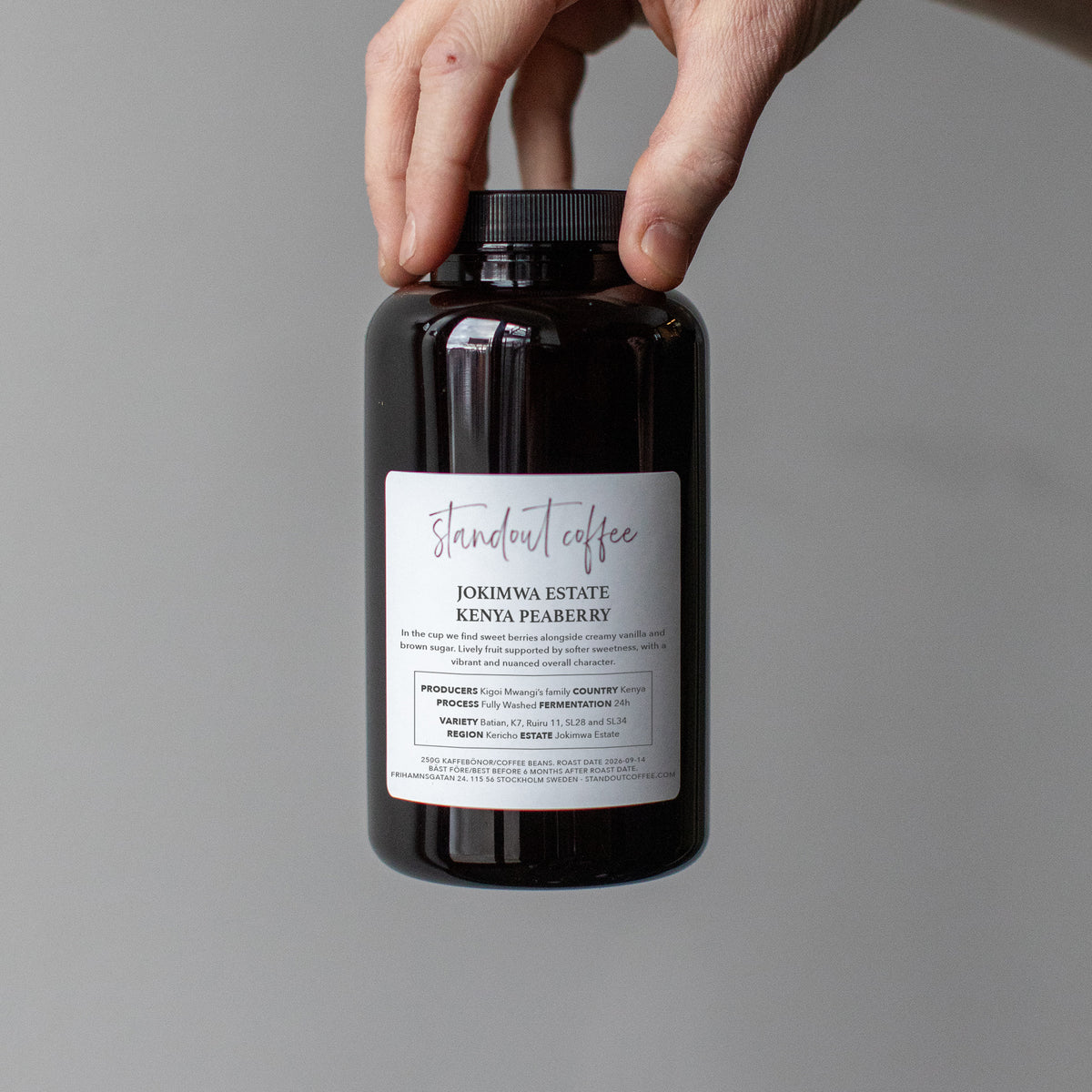
The Jar: Contains 250 grams of fresh roasted specialty coffee beans.
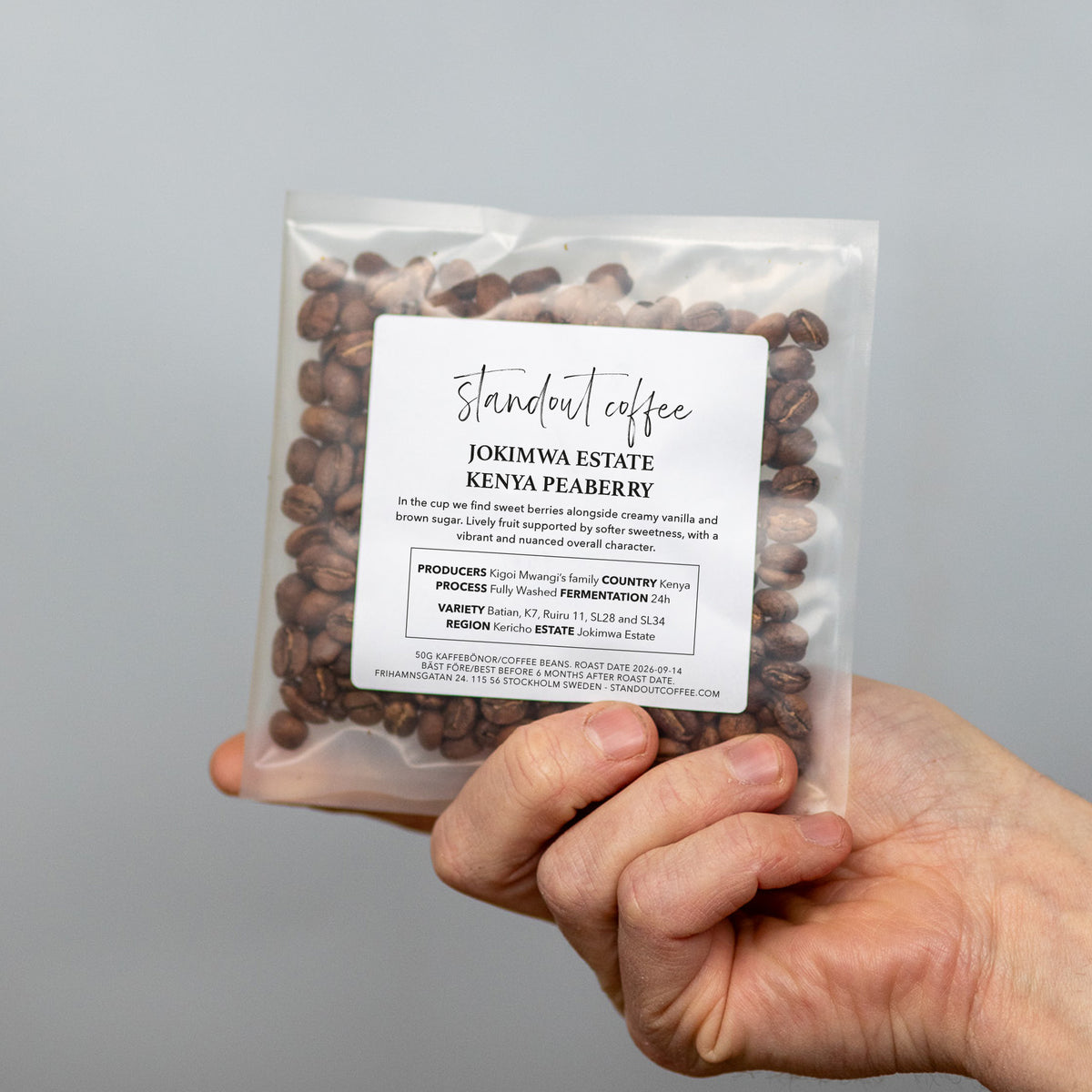
The Box: Contains 100 grams grams of whole competition style coffee beans.
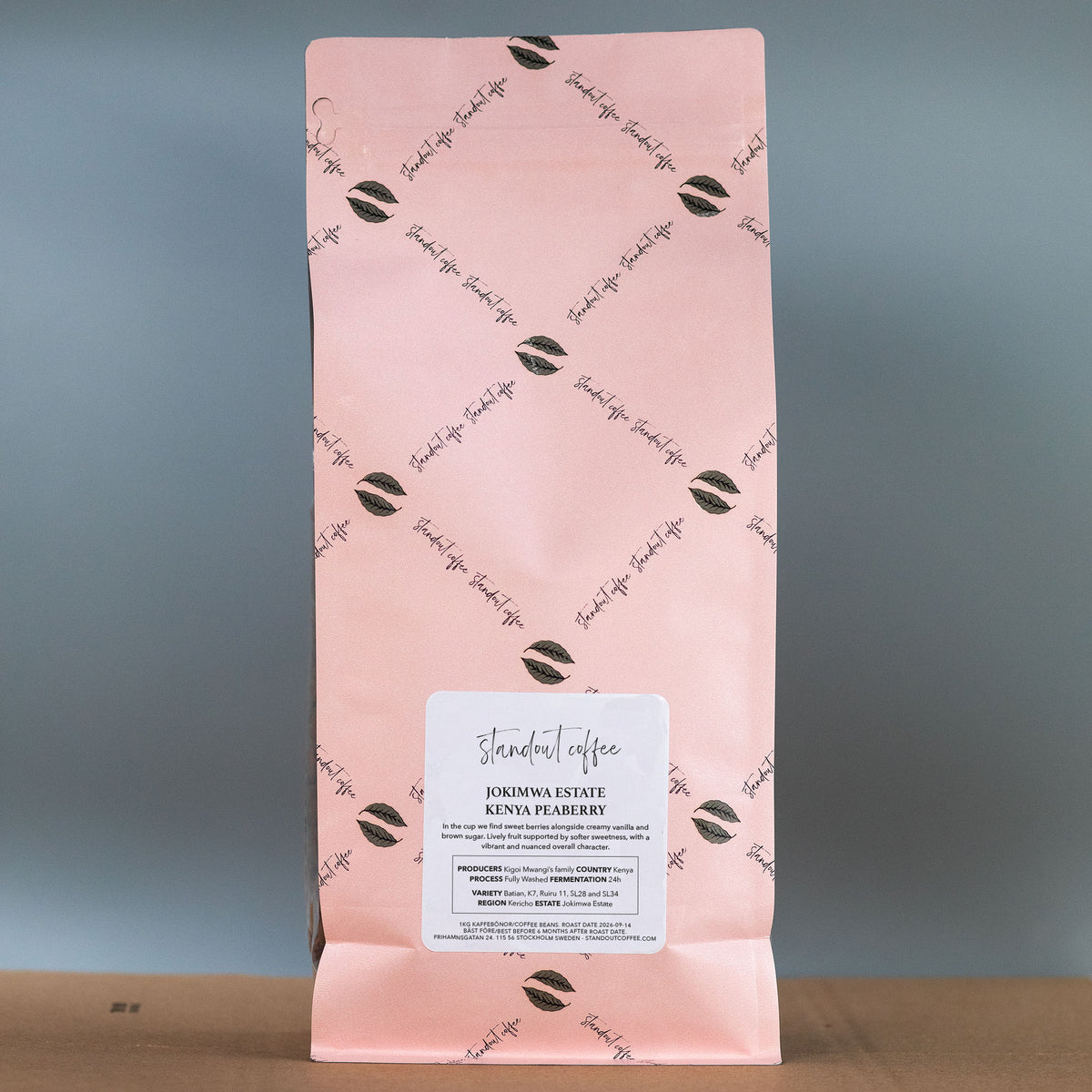
The Big Bag: Contains 1000 grams of fresh roasted specialty coffee beans.
The Capsule box: Contains 10/50 biodegradable Nespresso compatible coffee capsules.
Roast Philosophy
Our coffees are roasted to shine both as filter brews and as competition-style espresso. They sit right in the sweet spot between specialty and competition coffees – clean, expressive, and precise.
If you’re a coffee bar or a private customer interested in learning more about our roast philosophy, or if you’d like something custom roasted for you and your clients, just leave us a note in the comments during checkout. We’ll be happy to get in touch.
How to brew
The Double Bloom | 15 g coffee/250 g water
⏱ 0:00-0:10 | 50 grams
⏱ 0:30-0:40 | 50 grams
⏱ 1:00-1:10 | 150 grams
Brew time for this recipe should be between 2:40-3:00!
Regarding extraction, this recipe results in a TDS value of 1,35 ≈ 20,5 % extraction.
Download our FREE V60 brew guide, The Double Bloom Recipe here: PDF or ePUB
Shipping with DHL Express Globemail
For international shipping: Once DHL Express has shipped your coffee out of Sweden they hand it over to the destination country's national post service.
If you have special delivery instructions or requests, please leave a note in your cart before checkout.